Tuesday, 31 July 2012

From the Mother River

 Two furry hands groped under our door as another light fitting was smashed and another chair crashed to the ground outside. We were being held hostage in our room by a troupe of rather aggressive macaques. The veranda outside was a chaos of upturned furniture and shrieking monkey. Had we been able to step outside we could have overlooked the mighty Ganges, watched the pilgrims descending the ancient stone steps to take the holy waters. Slightly downstream, swarms of orange clad worshippers were making their way to the mother river, water containers dangling from gaudily decorated shoulder poles. They chanted and shouted, jostling past each other, unable to wait for their first touch, their first taste of this watery goddess. Considering the water is the depository for the nearby burning ghats (where human bodies are burnt before the remains are cleansed by the river), not to mention the destination for much of the city's sewage, we decided bathing in, let alone drinking, the water would not be wise. This didn't stop another army of pious germs flooding pilgrim-like into my weak and unsuspecting foreign gut. Though the monkeys had let us live, my poor culture-shocked tummy left me contained once more in our room. I lay there, guts and fan churning, and dreamt of cool mountain climes.
As always, Varanasi had slapped us in the face (and delivered a further blow to the stomach). It is a city where every journey to he shop involves pushing along tiny alleys, past vast Brahmin cows, harrying pilgrims and scabby dogs. As well as these obstacles, you also have to keep your eyes to the ground for it is slalom of cow shit, litter and scrawny puppies. The puppies in particular often blocked quick progress as Nic had to stop and stare adoringly at every one. Day by day, the heat brewed until it had exceeded 40 degrees (I'm not sure what that is in Fahrenheit but it's really about time you joined the metric age) and monsoon clouds boiled above the river. We needed to get out, we needed fresh air (and fluffier, less scabby puppies).


We took a train to Delhi, chatting all evening to the others in the carriage, dropping off to sleep to the rhythms of the train and awaking to the melodies of the chai-wallahs and snack men. We weren't in Delhi to see Delhi (we hav been many times before) but to take a bus north. The night was spent on a bus that twisted up and up into the Himalayan foothills, emerging into the Kullu valley as the sun rose behind the clouds that drifted endlessly down from green mountain slopes. The smell of pine and cannabis (it grows like nettles by the side of the road) drifted through the bus and expelled the fetid stuffiness of the plains from our lungs.


We are staying near Manali in a village of slate-roofed timber houses and slapdash concrete guesthouses. From our room we can see the opposite slopes of this vast green valley and, when the cloud momentarily slips from the summits, the snow-dusted peaks beyond. 


It's good to see India is still a gathering place for hippies, the traveller culture here has barely changed since the Seventies. Travellers still arrive Millets-clad and emerge two days later in baggy pantaloons, salwar shirts and beads. Even the original hippies are still here in their folds of tanned skin and Hindu scarves, their long hair receding toward balding scalps. Jim Morrison still stares gormlessly from tie-dyed T-shirts, 'No Woman No Cry' still plays endlessly from sound systems as old as the hippies themselves.


So we sit here in our cool mountain hippiedom, watching the local women pick their way down the hillsides with baskets of fresh-picked apples and the local men bathe in the natural hot springs (as always during our travels, it seems the men have the better side of the deal). We travel next deeper into the heavenly heights to a place not even the mighty monsoon can reach. We're going back to a world of dust and goats and wrinkle-faced peasants. Over the mountains and into the great wastes beyond...


Monday, 16 July 2012

In the City of Joy

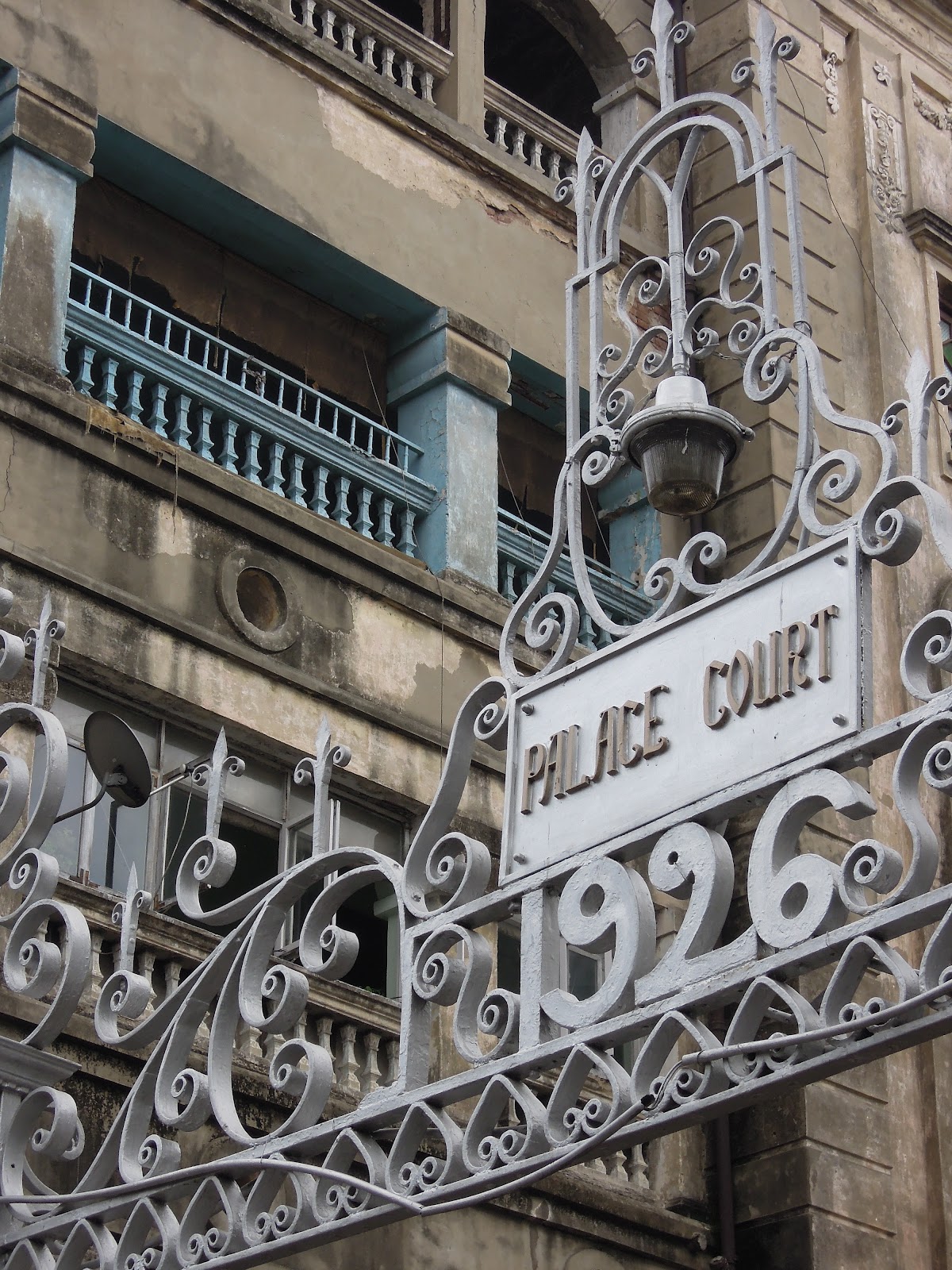
As we left Calcutta airport by an aging Austin taxi, India wrapped its considerable arms around us. In this sweaty embrace, we breathed the familiar scents of frying food, incense, paan and sun-dried urine. The traffic and the city contracted and pressed around us so that every visible space contained anther life, another narrative. In that 45 minute journey, a thousand stories rolled by the window, stories of tragedy, joy and drama. Ragged men in grubby lungis pulled man-powered rickshaws laden with plump ladies, fat rolling from the gaps in their saris. The sides of the streets (for, in India, pavements are rare) were colonised by shelters of tarpaulin and stoves of battered tin, hot chai being brewed for the slow-wheeling masses. As we stopped at a traffic light (another rare thing), a child came to the window to beg, his clothes black, his skin grey, his eyes deadened from glue-sniffing. In all likelihood a  Fagin-like beggarmaster would be watching his young charge, waiting for his pockets to be filled. In many respects Calcutta is remarkably like Dicken's London. But such tragic views are soon obscured by a joyously hand-painted truck, gods and goddesses in garish colours, garlands of plastic flowers around the windscreens. 'India is Great!' proclaim inscriptions on the trucks, or 'Horn Please!' (this because many vehicles lack wing mirrors and subsequently any knowledge of what is behind them). In compliance, the roads are filled with the sound of honking, screeching horns that clash with the Bollywood music and holy songs that crack and spit from distorted speakers. Monsoon-ravaged colonial buildings sprout foliage and cracked plaster, like once-elegant 1920s dames that have lost their marbles in old age. Roots wrap window frames in an echo of Angkor Wat but here there are still faces behind the glass.
Too tired to search for a decent room, we took a darkened hole with peeling paint and a fan held up with newspaper and parcel tape. Pressing our faces to filth-smudged pillows, we drifted off to the beautiful music of a nearby prayer session.           

All of this may sound somewhat hellish and, in many ways, it is, but it is also so alive, so full of hope and joy. It's as if you can witness the full spectrum of human experience in a few steps down the street. It had been six years since last we were here and twelve since we first arrived as wide-eyed teenagers and we were now delighted that our own narrative had finally rejoined this great ocean of tales. In a strange way, it felt like we were home.

We took refuge from the teeming, reeking streets in an old British Museum. Many rooms had barely changed since Victorian times, glass topped cabinets of rocks and fossils gathering dust, eight-legged goat fetuses in jars, slowly decaying stuffed animals. If, like me, Victorian taxidermy is your bag, it's a fine day out. In Calcutta, you realise how permanent a fixture the British believed themselves to be, there are buildings grander than many of those in London, great bridges of iron, monuments to the distant, mythical monarchs. Despite our strict anti-colonialism, we couldn't help but feel some measure of sorrow at the sight of these buildings slowly crumbling, the rotting corpses of a vanquished empire. I'm not quite sure what is happening to me, in Bangkok we had somehow ended up waving flags at the passing King in a gaggle of fawning grannies, and here I was in Calcutta shedding tears for our once 'glorious' Britain.

With the car horns still echoing in our ears we left Calcutta by sleeper train, the city sliding, no, juddering, by. We settled onto our grotty bunks and enjoyed the night air that filtered in through the glassless windows. Our train was due in to Gaya (the sight of Buddha's enlightenment) at 5:30am but at midnight they announced that the train was being re-routed and was going nowhere near our destination. We were suddenly headed instead to a city which we were almost hesitant to go back to, a city so intense it was like no other in the world. Allowing ourselves to be swept up by the twin powers of fate and poor time-tabling, we shrugged and returned to our bunks. Lying in my juddering bunk, a grin spread across my face, we were back in good old India, riding the rails to the holy city of Varanasi.        


Friday, 6 July 2012

Another Road Ends

Perhaps the most wonderful thing about this vagrant life is that we can change our immediate fate in a matter of seconds. Discussing the next few weeks in a restaurant in Siam Reap, we realised that we had had enough of Southeast Asia and that another land was calling to us from across the Bay of Bengal. It was already our plan to return to dear old India but, following this discussion, we were practically running to an internet cafe to advance our tickets. Within two days we were on a bus to Bangkok which is where we are now, waiting for our Sunday flight. Unfortunately, this means our overland journey is now over (it is not possible to travel to India through Myanmar) but we certainly haven't done badly, London to Bangkok without flying. In a sudden and highly uncharacteristic spate of mathematics l have reduced our grand journey to the following meaningless statistics.

22,000km travelled
189 days on the road
20 countries passed through
68 places slept in
54 buses ridden
12 cars
9 trains
3 boats
3 trucks
6 diaries filled with rambling nonsense
10 number systems learnt
3 alphabets mastered (almost, and one of them is our own)
3rd trip of a lifetime

So that about wraps it up. You may be wondering why we are returning to India for the third time but I hope my next post will serve as some sort of explanation...


Monday, 2 July 2012

Of Lost Histories

Bayon Temple, Angkor Thom, Cambodia. There are 216 such heads in this one temple.The woman on the left gives a sense of the scale.
Until the events of the last few days, we had been vaguely regretting the decision to come to Southeast Asia. We hadn't felt properly challenged, hadn't felt that 'I can't believe we're here' feeling that we find essential to our way of travelling. The temples of Angkor in western Cambodia have gone a long way to set that right. 

You are probably familiar with images of Angkor Wat, the vast Hindu temple with its iconic three-domed silhouette, but Angkor Wat is just one of the many glories to be found near the city of Siem Reap. This was once the capital of a mighty empire, a city of a million people at a time when London had less than fifty thousand. An empire that, after overstretching itself into extinction, was swallowed up by the jungle. The temples of Angkor cover a huge area and, in the last two days, we have cycled fifty-odd kilometres visiting the various lichen-stained temples, monasteries and Buddhas. We've cycled down puddle-ridden lanes to discover walls and archways entangled in the jungle and clambered up crumbling pyramids to survey the stupas rising from the trees. In places, vast roots have ensnared the masonry like giant octopi, wrapping their thick tentacles around doorways and weather-worn carvings. We cycled through the monsoon rains and sheltered in ancient shrines that smelt of bats and incense or watched the brief washes of sun send giant serene Buddha faces into relief. It was utterly beautiful and made all our days of dissatisfaction melt in to meaninglessness. These are the kind of things you travel so many thousands of miles to see. 

Preah Khan, Angkor 

[My recent spate of tourist-bashing isn't quite over yet though. One middle-aged American was trying to frame a temple with his massively over-sized lens but couldn't quite cut out the poor grubby kids who were trying to peddle postcards and bracelets 'It's okay,' he said to his partner 'I can Photoshop the little sh*ts out later.' ]

Before arriving in Siem Reap, we'd spent a rather lovely week on the beach. I won't go into the details because talk of huts and beaches and glittering seas will bore you and quite possibly make you want to hurt me. The most story-worthy event of the week was when we signed up for a boat/snorkeling  trip to some islands. We were both terribly excited until Nic remembered that she hated both fish and boats. Instead of gliding smoothly over turquoise waters as I had imagined, the boat heaved over a choppy sea and we got thoroughly soaked by a sudden rainstorm. We then stopped to snorkel but there was barely a fish to be seen, the masks leaked and I cut my foot by accidentally kicking a stack of corral (perhaps also contributing to the slow death of a delicate ecosystem).  It wasn't the best day of our trip and, with Nic swearing never to set foot on a boat again, we headed back to our beach hut to spend the remainder of the week doing bugger all. And a mighty fine bugger all it was too.

Nic thoroughly enjoys her day out.
Continuing this strange, reverse narrative, we now travel back in time and space to Phnom Penh. Cambodia’s capital is a massive grid of monsoon-stained concrete and fish-stinking markets, ravaged by wave after wave of tuk-tuks and scooters. When I remember it now I think of suicidal dashes across liquid traffic while breathing the smog of a thousand two-stroke engines. There are many phrases with which I could describe Phnom Penh most of them involving the word ‘hole’. 

Phnom Penh
However, Phnom Penh was also a serious, if hugely upsetting education. Just outside the city were the Killing Fields. It was here that the brutal Khmer Rouge regime murdered nearly 20,000 men, women and children. This of course was only a fraction of those murdered across the country between 1975 and 1979 (it has been estimated that 25% of Cambodians perished as a direct result of the regime’s actions). Among the victims were people who had been killed simply for ‘looking intelligent’, babies and children slaughtered because their father was a ‘dissident’ or simply a personal enemy of an officer. Because of the recent rains, the topsoil on the open graves had partly washed away to reveal fragments of bone and scraps of clothing. Looking around the warm, smiling faces of Cambodia today, it’s shocking to think that anyone over the age of 35 must have either been a victim or a perpetrator. It feels like Cambodia is in a similar place to post-Nazi Germany, wanting to know how it was that Cambodians came to murder Cambodians but unable to look the painfully recent truth straight in the eye. This is perhaps why they so often look back with pride to the glories of a thousand years ago and why everything from the money to national beer is emblazoned with a glorious image of Angkor Wat, hoping that their pride in the ancients can eclipse their more recent shame.  

S21, Phnom Penh. This was the prison/torture facility from where people were sent to the Killing Fields. 


Sunday, 24 June 2012

Escape to the Four Thousand Islands

We were squeezed in between the tanned and tattooed shoulders of Lynx-scented Europeans. One of them had a half-drunk bottle of Johnnie Walker in his lap and was slurring his words. 'Nice breakfast' sniggered his mate who was sporting a particularly offensive pair of luminous pink shorts. It was 8am and we had made the foolish and lazy mistake of taking the tourist minibus instead of the usual local bus. As we pulled away, Nic looked like she was chewing on something rotten 'there was a girl outside our hostel' she said, mouth twisted in disgust 'smoking with one hand and shaving her legs with the other.''
As the minibus continued its southern trajectory, the drunk lad was muttering something about dolphins in one ear while Nic was busy recounting her shock in the other.

When we finally came to a stop, Nic and I leapt out and practically ran to escape the others, scampering through a small market thick with the smell of fermenting fish and down to the swirling waters of the Mekong. Turning to check the progress of our drunken pursuers, we fled toward a small wooden jetty. From here, boats left for the islands that lay a kilometre from the shore. We bought our tickets but the others were fast approaching, the drunk one was burping notes into a didgeridoo, the one with the offensive shorts had doffed an equally offensive headband. Run. They were nearly on us when a man waved us onto a boat and we were slipping away, the mud brown waters sealing us off from the shore. I looked back to see the jetty receding into a landscape of greens and browns, the only other colour was provided by a shrinking pair of luminous pink shorts.

We were approaching Four Thousand Islands, a place where the Mekong spreads its limbs wide, encircling a cluster of palm-fringed islands. Wooden canoes drifted past on the current and a thousand butterflies flickered in the undergrowth that seemed to sprout from the river's surface. The boat hit the muddy bank near a monsoon-faded old bridge. We disembarked and walked past stilted wooden huts and a rotting French school, the last evidence of a colonial past that was being slowly digested by the jungle. We found a cabin by the river and swung in our hammocks, watching scooters putter over the bridge and boats putter beneath it. Amongst these various putterings and flutterings we were lulled into a pleasant stupor and the days, like the great river itself, rolled languidly by.

We had enjoyed Laos but were pleased to be leaving for Cambodia. We crossed the border and followed the Mekong on its journey south. We stopped at the town of Kratie where we took a boat out to see the endangered Irrawaddy River dolphins. We sat watching the water, drifting between islets of half-submerged grass and were soon rewarded. Dolphins broke the surface all around. Even Nic, who has a deep resentment for dolphins because of their 'smug attitude', claimed it to a beautiful experience.

I'm actually way behind with this blog as we're now staring at lovely blue sea and swimming has become a more pressing matter than blogging. I shall endeavour to catch up in the next few days, selflessly sacrificing my beach time for your entertainment. It seems I have become the dolphin of Nic's hatred, a smug face grinning inanely from the waves.

Saturday, 9 June 2012

Foreign Devils of the Mekong

Foreign Devils of the Mekong

It seems I have created great confusion with my last post. One road may have ended but we're not quite done yet. But gone is the dust! Gone are the barren plains! For, dear reader, we are now in a world of lush vegetation and unimaginable humidity, watching the monsoon skies explode above our heads.

This new chapter of our trip began on a train in China, a train that headed ever south into stifling valleys of palm and bamboo. This verdant corridor would break now and again to reveal glinting paddies full of coolie-hatted peasants planting rice. [If anyone has less colonial name for the 'coolie' hat, do let me know.] We found ourselves in the southern Chinese town of Jinghong where a diverse population includes Han, Thai and Burmese peoples. Dipping our feet in the Mekong, which was stained luminous colours by the neon of the karaoke bars, we watched the great river flow ever southwards. We took a bus to the border with Laos and crossed into this sleepy little republic. Laos is a place where the people seem to wilt like bamboo, one often has to wake them in order to buy a bus ticket or a bottle of water. Even the name, Laos, is pronounced with an almost feline listlessness.

After a few days, we were standing by the Mekong once more, hoping for a passenger boat to materialise on the lazy brown waters. A morning mist lay on the green hills of the Burmese shore, rain fell on the rattan cabin in which we'd slept. The cabin was a wonderfully authentic affair of rusting fans and mosquito netting. The wooden shutters
would open to a world of green and rain and a wall of sound, raindrops drumming on palm fronds, crickets and cicadas trilling like a thousand tiny machines. As we waited for a boat that would never come, we watched local tribal women hauling sacks of potatoes up the muddy banks from dugout canoes. They wore fantastic headdresses dripping with silver medallions and many were naked from the waist up.

When we finally understood that a boat wasn't going to come, we back-tracked through lanes of stilted rattan houses and wet-nosed water buffalo before catching a bus to Luang Prabang. Our guesthouse there displayed a list of rules from the local police office warning us of potential criminal activities. To my great disappointment, we were not allowed to 'bring drugs, crambling or bringing both women and men which is not your own husband or wife into the room for making love.' This I could just about handle, but the next rule dealt a serious blow to our entertainment plans. We were not allowed to 'bring prostate or others into your accomodation to make sex movies'. I wasn't entirely sure how to prevent my prostate from entering the room without a serious operation but we did put our porn movie plans on ice.

Somehow we managed to enjoy Luang Prabang without resorting to such deviance, relying instead on massages, ornate temples and Lao coffee to keep us entertained. The strange thing in Laos is that a thousand other backpackers have already walked the puddle-ridden streets we now look upon. Laos suffers from a spill-over of fun seeking backpackers from nearby Thailand. People that wear vests sporting the names of their last destination, people that flock to the infamous Vang Vieng to party all day and watch episodes of Friends while smoking opium (I'm not sure which is more mind-rotting). There was a Guardian article recently detailing the madness in Vang Vieng which explained how 26 travellers have died there in the past year after taking drunken dives into the river. The locals are now afraid of the waters, scared that they are cursed with evil spirits. Just idiotic foreign devils. We ended up in a bar in Luang Prabang that was filled with western revellers. Appalling commercial R'n'B pumped out as muscle-bound Aussies played volleyball and fluff-faced backpackers did shots. It felt like a party scene from an American teen movie. Perhaps, we thought, Laos is not the place for us.

Lao culture is already in great danger from its powerful neighbours. China is spreading south with neo-colonialist tendencies, stripping the hills of timber as they pass, Thailand and Vietnam are squeezing in from the flanks. And perhaps we are no better. Though I believe that independent travel (if done sensitively) can be a force for good, in Laos it is bringing the very worst parts of our culture to a little developed country. Sometimes we don't feel like we're even in Laos, just a playground for stoned and drunken westerners. Buddhist monks crossing paths with girls in bikini tops.

While travelling the Silk Road it felt like we had purpose (however illusionary that may have been) and were learning and, to a lesser extent, teaching as we went along. We were never really treated as tourists, simply foreign guests. We now feel like we've fallen into a world of meaningless travel, a world where the backpackers are simply on extended beach holidays. I am possibly being a little superior here (imagine!) and perhaps we cannot so easily separate ourselves from them. However, it doesn't really seem right here and so we're heading southward toward Cambodia. Apparently it's not been entirely colonised by f**kwits just yet. Unless, of course, you count the Khmer Rouge. On that rather tasteless note, I shall bid you farewell and hope that I won't resort to more whinging in the next exciting post...

Sunday, 13 May 2012

Into the Desert of Death

We arrived in China with dust between our rattling teeth. Due to the roads of uneven rubble and our Chinese truck's complete lack of meaningful suspension, we had to cling to the bundles around us to avoid being thrown out of our seats. The greenery of Kyrgyzstan had dissolved to leave barren red mountains and clouds of dust so thick you could see it wafting through the windows like smoke. We were entering the great Taklamakan desert, the most deadly stretch of the old Silk Road. Some believe Taklamakan simply means 'once you go in, you never come out' others have referred to it as The Desert of Death. The Desert of Considerable, if not Fatal, Discomfort might be a more apt title today. Alongside the 'road', wind-blown construction workers slept in bleak encampments, trying to lay a 21st Century highway in this ageless wilderness. For the moment, the wilds appeared to be winning.

After five hours of this truck-based torture, a Chinese terminal building emerged from the murk surrounded in Disneyland streetlights. 'Welcome to China!' cried a uniformed guard. In customs there were informative signs in Chinese and Arabic characters but, beneath this, the thoughtful English translation simply read 'Times New Roman'.

Kashgar, our first stop in China, is a predominantly Uighur city. The Uighurs are a Turkic, Islamic people who have found themselves, largely unhappily, under Chinese rule. The people are far closer in appearance to Uzbeks than to Chinese and the language is a close cousin of Turkish. Interestingly, Iran aside, we've been using the same words for numbers ever since arriving in Istanbul. Who said foreigners weren't all the same?

The streets of old Kashgar hummed with life, skull caps and wispy beards decorated the wizened faces that gathered around the market stalls as hawkers sold herbal aphrodisiacs, bear fat skin ointment and a yellow juice that came from a weird stew of scorpions, snakes and hedgehogs. Bewhiskered men spilt from the Friday mosque and ate bread hot from the street tandoors or bundled their veiled wives and kids onto their scooters, puttering off into lanes of mud and smoke. Most of the surrounding buildings were in a state of ruin, bulldozed to make way for Modern China. Gaudy new malls sat like abandoned spacecraft amongst the rubble, sending neon messages back to the mothership in Beijing. Here, Han Chinese (the predominant ethnic group in China) shopped for fashions and face creams and there was barely a Uighur in sight. Over-loud sound systems blared the latest pappy Chinese pop but failed to drown out the honking cars and the Mandarin being barked on every street corner. Though muted by the ever-present dust, the Han buildings had their own volume, assaulting the eyes with their acid-trip technicolor. We were saddened by such Han imperialism, but largely delighted, after months in the Muslim world, to be in the brash, noisy silliness of China.

On the outskirts of Kashgar sits the near-legendary animal market. We rode out there on the back of a kind of motorbike trailer. Other visitors were taking the same method, stupid looking sheep and angry looking bulls eyeing us warily. The market was a mass of hoof and dust, the air filled with a lowing and braying and whinnying that mingled with the cries of the traders as animals were led off to new homes (or perhaps new pots), horses were test-driven and fat-tailed sheep's fleshy rumps were fondled for maximum fat. Though Nic had her eye on some pathetic-looking donkey or other we managed to leave empty-handed.

One of the true highlights of Kashgar was the people we met. Having spent months travelling less-travelled roads, it was lovely to meet a hostel-full of fellow backpackers. It is remarkable how quickly strong friendships can form and we spent a happy week eating, sleeping (in dorms, you understand and generally in separate bunks) and living with a wonderful group of people. Sadly but inevitably, these relationships are always wrenched apart by the pull of the road and soon our group was scattered to the sands and to the mountains.

We headed east along the northern Silk Road, spending 24 hours on a train that smelt of stale cigarettes and instant noodles. Despite an almost unassailable language barrier we had soon made friends with our fellow passengers and even, after a few hours' struggle, managed to ascertain their names. Outside, the desert was bleak and forbidding and barely a non-humped soul stirred. We finally arrived in Turpan, a hot, dusty (apologies for my constant references to dust, it's just so, well, dusty) town that sits in the second lowest depression in the world! I was quite excited by this fact before we arrived but then realised that there's not much to be said for being low. It's just hot. And dusty.

We cycled out into the countryside (read: dusty plain) and waved at the cheerful locals who called out 'hello!' I like to think they thought we looked like nice sorts and were seeking to form some cross-cultural relationships but fear they may have been saying 'look there's a hairy freak on a bike, let's wave and see what it does!' The hairy freak and his spaniel-eared companion dutifully waved back. Anyway, this is all rather tangental. We reached a ruined city that had been half-consumed by the desert, ate a picnic in a 5th century Buddhist temple and returned to catch a night bus to the Silk Road hub of Dunhuang.

The bunks on the bus were two feet too short for me but even with my knees round my ears, I still managed to enjoy the moonlit desertscapes and fell asleep watching the glowing cigarette ends of insomniac passengers. In Dunhuang we slept in a cabin that sat in the shadow of a vast range of perfect sand dunes and were awoken by the cries of goat kids and the papery flap of the birds that darted from the eaves. Nearby was one of the 'sights' we've been looking forward to since London, the Thousand Buddha Caves.

We were guided around by torchlight for each of the 700-odd caves contains exquisitely delicate wall paintings and sculptures dating back more than a thousand years. The artwork is a clear child of the Silk Road, where Persian, Central Asian and Indian styles mingle with the more local Tibetan and Chinese aesthetic. It was here that European archeologists first discovered the Silk Road's importance in spreading Buddhism to China. It was here also that the British explorer Aurel Stein ran off with thousands of priceless Buddhist scrolls some of which you can still see at the British Museum. 'You've seen them?' said our guide with great excitement. It is times like this when I realise how miraculously lucky we are to be able to see all these wonderful things. With the Buddhas left once more to their peaceful slumber, we set off toward the setting sun, nothing but a dull glow in a sea of dust.